If your workdays are full and your time off feels precious, where you live matters in a very practical way. Mission Bay has become one of San Francisco’s clearest answers for professionals who want a shorter routine, easier access to care and transit, and a home base that supports a fast-moving schedule. If you are weighing whether this waterfront neighborhood fits your lifestyle, this guide will help you understand the tradeoffs, the conveniences, and what to watch for as you buy. Let’s dive in.
Why Mission Bay Works
Mission Bay was built for a more streamlined city lifestyle. According to the City and County of San Francisco, the neighborhood spans roughly 238 acres on the waterfront and includes more than 6,000 homes, the 60.2-acre UCSF Mission Bay campus, the Chase Center, over 5.1 million square feet of office and lab space, more than 24 acres of public parks, and a retail corridor along 4th Street.
That mix matters if you are balancing work, wellness, errands, and commute time. Rather than functioning as a purely residential pocket, Mission Bay operates as a live-work-near-care district where many daily needs are close at hand.
Proximity Supports Busy Schedules
For many buyers, Mission Bay’s biggest advantage is access. UCSF notes that its Mission Bay campus includes UCSF Benioff Children’s Hospital San Francisco, the Bakar Precision Cancer Medicine Building, the Joan and Sanford I. Weill Neurosciences Building, and the Bayfront Medical Building.
UCSF also reports that the Bayfront Medical Building opened in August 2024 and brings primary care, urgent care, same-day surgery, and specialty care together under one roof. The facility houses more than 130 physicians and is expected to support about 131,000 patient visits per year.
If you work in medicine, research, biotech, or adjacent fields, that concentration of institutions can be a meaningful quality-of-life benefit. It can reduce commute friction and place work, appointments, and services within a much tighter daily radius.
A Strong Fit for Life Sciences and Tech-Adjacent Buyers
Mission Bay is not just convenient for healthcare professionals. Official redevelopment documents describe the area as a mixed-income, transit-oriented residential, commercial, and institutional district with office, biotech, and hotel uses.
Those same Mission Bay redevelopment materials explain that life sciences, biotech, and high-tech firms have moved into the larger area because of proximity to UCSF, transit-oriented housing, and downtown San Francisco. For buyers who value efficiency and location strategy, that helps explain why the neighborhood continues to draw a professional, time-conscious audience.
Commute Options Matter Here
A neighborhood can look appealing on paper, but for busy professionals, the daily commute often decides whether it truly works. Mission Bay stands out because it offers multiple transit layers instead of relying on a single mode of travel.
Muni Connects Mission Bay to Key Destinations
The SFMTA T Third Street line runs through Mission Bay and continues north into SoMa, Union Square/Market Street, and Chinatown-Rose Pak. SFMTA also says the Mission Bay Loop improves reliability and supports service to destinations such as Caltrain, BART, the Financial District, and Chinatown.
That level of connectivity can make a car-light routine more realistic. If you split time between downtown meetings, medical campuses, and regional transit, Mission Bay offers practical flexibility.
Caltrain Adds Peninsula Access
For professionals whose work takes them beyond San Francisco, Mission Bay benefits from being close to the city’s Caltrain hub. Caltrain provides commuter rail service along the Peninsula through the South Bay to San Jose and Gilroy, and its San Francisco station at Fourth and King is the northern terminus.
Mission Bay planning documents describe Mission Bay North as adjacent to that station and to two light rail lines. If your schedule includes Peninsula office visits or regional travel, that access can be one of the neighborhood’s strongest selling points.
The Condo Lifestyle Tradeoff
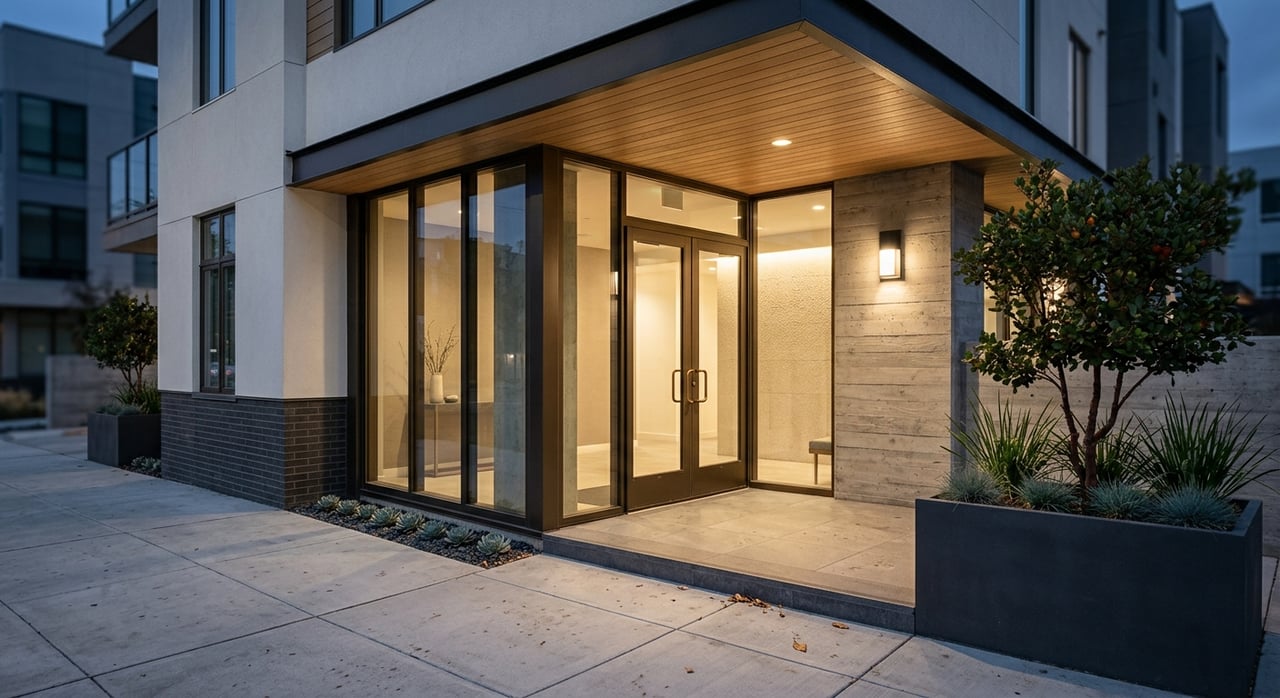
Mission Bay is often associated with newer condo buildings and service-rich amenities. For many buyers, that is exactly the appeal.
Current listing examples in the research show a pattern of features that align with busy urban living: attended lobbies, lap pools, spas, fitness studios, bike storage, garage parking, business centers, and outdoor lounge areas. In practical terms, these kinds of buildings can reduce the need to outsource daily convenience elsewhere.
What HOA Fees Really Cover
If you are comparing Mission Bay to other San Francisco neighborhoods, monthly HOA dues deserve close attention. The research includes examples ranging from $738 per month to $1,664 per month, depending on the building and service package.
The Consumer Financial Protection Bureau explains that HOA dues are usually paid directly to the HOA and are not included in your mortgage payment. It also notes that dues can range from a few hundred dollars a month to more than $1,000.
According to the same CFPB guidance, condo and HOA fees can help pay for common-area maintenance, reserve funds, and services such as pools, gyms, trash removal, water and sewage, pest control, and repairs. For a busy buyer, that means the monthly fee is often less about “extra cost” and more about the service model of the building.
Time Savings Can Offset Higher Carrying Costs
This is where Mission Bay becomes a lifestyle decision, not just a price-per-square-foot exercise. Higher dues may support conveniences such as staffed entry, package handling, parking, fitness amenities, and reduced maintenance responsibilities.
If you travel often, keep long work hours, or simply want a more contained day-to-day routine, that tradeoff may make sense. The key is to evaluate the full monthly carrying cost, including mortgage, taxes, insurance, and HOA dues, rather than focusing on purchase price alone.
Mission Bay Pricing in Context
Mission Bay often attracts buyers who want newer housing stock and a more modern building experience than many classic San Francisco neighborhoods offer. The price point is an important part of that conversation.
According to Redfin’s Mission Bay housing market data, the median sale price in Mission Bay was $840,000 in February 2026, with a median sale price per square foot of $894. Redfin also reports that Mission Bay had 20 condos for sale at a median listing price of $997,000 and describes the market as very competitive, with homes going pending in about 28 days.
How Mission Bay Compares Nearby
The same research shows that nearby waterfront districts posted higher median sale prices in February 2026. Redfin reported $1,037,500 for South Beach, $992,500 for Rincon Hill, and $1.1 million for Dogpatch.
That does not mean Mission Bay is uniformly less expensive in every building or for every unit type. It does suggest, however, that buyers may find Mission Bay relatively appealing if they prioritize newer towers, proximity to UCSF, and convenience-oriented amenities while still wanting to stay within the broader waterfront market.
Is Mission Bay Right for You?
Mission Bay tends to reward buyers who value efficiency. If you want transit access, close proximity to major medical and research institutions, and a condo lifestyle that can reduce daily friction, the neighborhood offers a compelling case.
At the same time, it is worth going in with clear eyes. Monthly carrying costs can rise quickly once HOA dues are added, and building-by-building differences can be substantial in both amenities and fee structure.
For that reason, Mission Bay is often best evaluated through the lens of time, convenience, and predictability. If those are priorities in your home search, Mission Bay may offer a very practical kind of luxury.
When you are evaluating where Mission Bay fits within your broader San Francisco search, working with an experienced local advisor can help you compare not just pricing, but the day-to-day value of location, services, and building quality. If you are considering a Mission Bay purchase or weighing it against other city neighborhoods, Heidi Rossi can help you assess the options with clarity and discretion.
FAQs
Is Mission Bay a good neighborhood for San Francisco professionals with long work hours?
- Yes. Mission Bay’s appeal is closely tied to proximity to UCSF, office and lab space, transit connections, and amenity-rich condo living that can simplify daily routines.
How convenient is Mission Bay transit for commuting around San Francisco?
- Mission Bay is well connected by the T Third Street line, with access toward SoMa, Union Square/Market Street, Chinatown, Caltrain, BART, and the Financial District through the broader transit network.
Are HOA fees in Mission Bay condos higher than buyers expect?
- They can be. The research shows example HOA dues from $738 to $1,664 per month, and those fees should be considered part of the overall service and maintenance package of the building.
What types of amenities are common in Mission Bay condo buildings?
- Research examples highlight features such as attended lobbies, fitness centers, lap pools, spas, bike storage, garage parking, business centers, and outdoor lounge areas.
How do Mission Bay home prices compare with nearby waterfront neighborhoods?
- Based on February 2026 Redfin data in the research, Mission Bay’s median sale price of $840,000 was lower than South Beach, Rincon Hill, and Dogpatch, though pricing varies significantly by building and unit.
Is Mission Bay useful for Peninsula commuters?
- Yes. Mission Bay benefits from its proximity to Caltrain’s San Francisco station at Fourth and King, which supports commuting along the Peninsula and into the South Bay.