Is now the right moment to list your Pacific Heights home, or should you wait for a clearer window? In a high-end, thin market like Pacific Heights, timing can influence price, days on market, and your stress level. You want a plan that respects your goals and the realities of a shifting market. In this guide, you’ll learn how to read local signals, choose a launch window, and prepare your home so you can move forward with confidence. Let’s dive in.
Read the market like a pro
Luxury homes in Pacific Heights sit in a smaller, more selective buyer pool. That means single sales can swing the numbers. Focus on trends over at least 30 to 90 days, and consider a broader comp window when needed.
- Months of inventory: Divide active listings by monthly sales. Lower months of inventory often favor sellers. In luxury segments, the baseline may run higher than entry-level markets, so watch for changes over time, not fixed thresholds.
- Median price and price per square foot: Use rolling comparisons month-over-month and year-over-year. Expect noise from one-off sales in the upper tier.
- Days on market: Rising DOM suggests softening demand; falling DOM points to stronger conditions. Luxury DOM can vary widely, so look for the direction of travel.
- List-to-sale price ratio: A shrinking ratio can signal pricing pressure. A stable or rising ratio suggests buyers are meeting seller expectations.
- New listings vs. pending activity: If new listings jump and pendings fall, conditions may be tilting toward buyers.
- Sales volume: If closed sales drop without a matching drop in inventory, months of inventory can rise.
Also factor in buyer mix. Pacific Heights attracts local move-up buyers, out-of-area and international interest, and a mix of cash and jumbo-financed purchasers. Shifts in jumbo mortgage availability and Bay Area employment sentiment, especially in tech, tend to influence demand.
Seasonality in Pacific Heights
San Francisco’s luxury seasonality is real but less pronounced than in many suburban markets. Even so, timing still matters.
- Spring advantage: March through May often sees more buyer activity and stronger engagement. Multiple-offer scenarios are more likely in this window.
- Summer patterns: Early summer can stay active; late summer often slows as travel ramps up.
- Fall and winter: Fall can be a solid window for well-prepared listings. Winter usually brings lower inventory and fewer buyers, which can still benefit a standout property.
Luxury buyers may not follow the same calendar as mass-market buyers. Relocations, corporate timelines, and international travel windows can shape showing traffic. Local events and tourism can also affect availability and logistics for open houses and private tours.
Decide to list now or wait
Your timing should balance market signals with your personal goals.
Ask yourself:
- Objective and timeline: Do you need a fast, certain sale, or are you optimizing price with flexibility?
- Replacement housing: Are you buying next? Consider financing plans, bridge options, and the timing of your purchase.
- Local trajectory: Are months of inventory and DOM improving or deteriorating over the last 30 to 90 days? Are list-to-sale ratios holding steady?
- Tax and regulatory timing: Will closing this year or next matter for your tax plan? Consult your CPA for guidance on capital gains and local taxes.
- Readiness: Can you complete high-ROI prep in time for a strong listing window?
If the indicators are tightening, earlier may be better. If the market is loosening and you can add meaningful value through preparation, waiting for a stronger season can pay off.
Prep that moves the needle
Luxury buyers expect refined presentation. In Pacific Heights, details like architectural integrity, sight lines, and view framing can make the difference.
High-ROI cosmetic refresh
- Interior paint in neutral palettes, deep cleaning, decluttering, and professional organization. Typical timeline: 1 to 2 weeks.
- Minor kitchen and bath updates, such as hardware swaps, re-grouting, or refinishing. Timeline: 2 to 6 weeks.
- Exterior touch-ups, light landscaping, and view-focused window and fireplace cleaning. Timeline: 1 to 3 weeks.
These steps usually shorten time on market and improve perceived value without long delays.
Staging and media
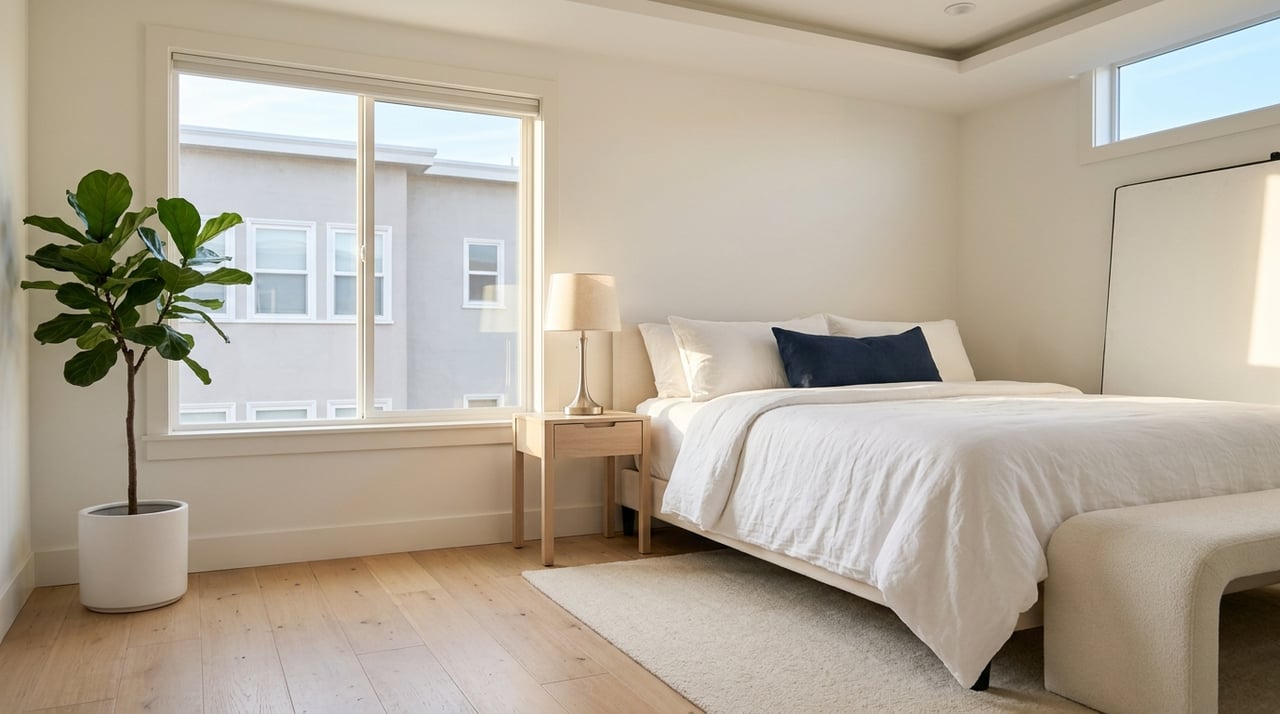
- Professional staging calibrated to scale, views, and formal rooms. Luxury staging often includes high-end furniture and art.
- Best-in-class photography, twilight images, floor plans, 3D tours, and drone imagery when appropriate.
- Typical timeline: 1 to 2 weeks.
Staging is especially impactful in the upper tier. It helps buyers visualize the lifestyle and can support your asking price.
Inspections and disclosures
- Pre-list inspections, including general, roof, and sewer. Consider seismic status for older structures.
- Use findings to guide repairs, pricing, and disclosures. Timeline: 2 to 4 weeks for scheduling and fixes.
Pre-sale diligence reduces the risk of renegotiation during escrow and can shorten contingencies.
Permits and major remodels
- Large-scale kitchen or bath remodels, structural changes, or historically sensitive work can take months and carry uncertain ROI on a sale timeline.
- Consider big projects only if they are necessary to meet market standards or if you would have done them regardless of selling.
Systems and documentation
- Review mechanicals, HVAC, elevators (if applicable), and life-safety items. Keep maintenance records and permits on hand. Buyers value documented improvements.
If you want a streamlined process, concierge-style coordination and a trusted vendor network can help you execute efficiently and protect your timeline.
Pricing in a shifting market
In a thin luxury market, pricing missteps can be costly. You want to be ambitious and defensible.
- Comp windows: Use a wider comparable-sales window, often 6 to 24 months, and adjust for unique features like views, terraces, and historic details.
- Strategy: In a cooling market, a competitive list price that attracts qualified buyers quickly can beat a long runway of reductions. In stronger periods, a slightly aggressive price may work if supported by comps and presentation.
- Proof points: Back your price with preparation, pre-list inspections, and premium media.
- Off-market vs. MLS: Quiet listings can deliver privacy and targeted outreach, but they reduce exposure in a market with a limited buyer pool. Weigh discretion against reach.
Marketing for Pacific Heights buyers
Your buyer may come from across town or across the globe. The plan should project quality and reach the right audience.
- High-end visuals: Twilight photography, drone context for Bay and bridge views, detailed floor plans, and immersive 3D tours.
- Broker-to-broker strategy: Private tours, curated invite lists, and outreach to relocation teams and luxury networks.
- Digital distribution: Targeted campaigns aimed at high-net-worth demographics and syndication to luxury portals.
- Open-house cadence: Strategic broker tours and selective public opens aligned with demand cycles and event calendars.
- Cross-neighborhood collaboration: Engage top agents in adjacent northside neighborhoods to tap buyer pools moving between Presidio Heights, Russian Hill, Nob Hill, Cow Hollow, and the Marina.
In Pacific Heights, highlight the elements that define value: view corridors, formal entertaining spaces, outdoor terraces, garage convenience, and thoughtful restorations.
Transactional timing and finance
The details matter in San Francisco. A clear plan can protect your net proceeds and your timeline.
- San Francisco transfer tax: City transfer taxes can be significant at higher price points. Confirm the schedule and model net proceeds with your tax advisor.
- Capital gains: The federal primary residence exclusion may apply if you meet the two-of-five-year rule. Consult your CPA regarding federal and state implications.
- Disclosures: California requires robust disclosures, including the Transfer Disclosure Statement and Natural Hazard Disclosure. Pre-list inspections help streamline this package.
- Permits and undocumented work: Older Pacific Heights homes can have legacy work. Verify permit history early to avoid escrow delays or price adjustments.
- Seismic considerations: Some buildings or lenders may require certain retrofit standards. Clarify status before you list.
- Financing patterns: Luxury buyers often use jumbo loans or cash. Monitor jumbo rate trends and underwriting conditions since they influence demand.
- Logistics: If you need to buy first, evaluate bridge financing or a post-closing rent-back. Build these options into your marketing and negotiating plan.
Timeline to launch
Work backward from your ideal list date. Here is a practical framework:
- 10 to 16+ weeks out: Define strategy (public vs. quiet). Hire your listing agent. Order pre-list inspections. Start permits or major repairs if needed.
- 6 to 10 weeks out: Complete major repairs and any pre-approved upgrades. Finalize staging plan. Schedule photography and media.
- 2 to 4 weeks out: Deep clean, declutter, and stage. Complete touch-ups. Prepare disclosures and marketing copy.
- Listing week: Capture final media, publish with full materials, host broker tours, and launch targeted outreach.
Key signals to watch
Keep a short list of metrics so you can make decisions quickly:
- Months of inventory (active listings divided by monthly sales)
- Median price and price per square foot (30-, 90-, 180-day trends)
- Median days on market
- List-to-sale price ratio
- New listings vs. closed sales
- Pending-to-active ratio
- Number of closed luxury sales in the past 6 to 12 months
Final thoughts
Selling in Pacific Heights is both an art and a process. When you combine smart timing with meticulous preparation and a clear pricing and marketing plan, you give yourself the best chance of a strong result, even in a shifting market. If you would like a confidential read on current conditions and a tailored timeline, schedule a private consultation with Heidi Rossi.
FAQs
What months are best to sell a Pacific Heights home?
- Spring often brings more buyer activity, while fall can work well for well-prepared listings; late summer and winter are typically slower but can still favor standout homes.
How do rising mortgage rates affect Pacific Heights luxury demand?
- Higher jumbo rates tend to shrink the financed buyer pool, while lower rates usually expand it; cash buyers help, but overall demand often tracks jumbo conditions.
Should I remodel before selling my Pacific Heights property?
- Cosmetic updates, staging, and pre-list inspections usually offer the best return and speed; major remodels can take months and carry uncertain payback on a sale timeline.
How is pricing different in Pacific Heights versus nearby areas?
- Pacific Heights often commands a premium for views, scale, and prestige; adjust comps and messaging versus Presidio Heights, Russian Hill, Nob Hill, Cow Hollow, and the Marina.
What pre-list inspections should I order in San Francisco?
- A general home, roof, and sewer inspection are common; consider seismic status and permit history to avoid surprises and streamline disclosures.