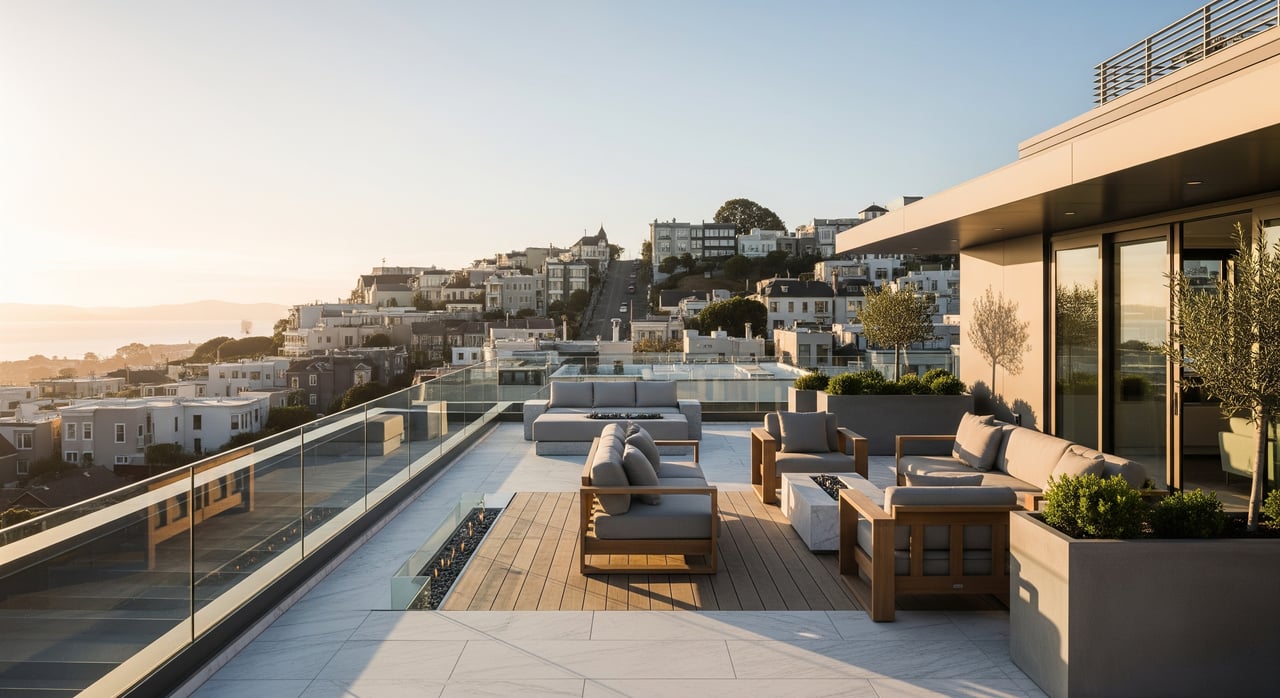
Craving more sun in San Francisco? Potrero Hill often delivers, and that sunshine shapes how you live day to day. If you’re deciding between a condo and a single-family home here, the right choice comes down to how you value light, outdoor space, maintenance, and walkability. This guide gives you a clear, local view of the tradeoffs so you can choose with confidence. Let’s dive in.
Potrero Hill in two minutes
Potrero Hill sits on San Francisco’s east side, generally described as between I‑280 and the Bay/US‑101 corridor, with 16th Street to the north and Cesar Chavez to the south. The hill’s elevation creates defined pockets with different light, views, and access. You’ll hear locals talk about the east slope, the north pockets around the 18th Street corridor, and the south pockets near Dogpatch and Mission Bay. Each area can feel distinct on the ground, sometimes block to block.
Sunlight and microclimate
Potrero Hill is widely known for more consistent sun compared with many parts of the city. The hill often blocks the marine layer that drifts over western and northern neighborhoods, and the eastward orientation helps capture earlier light.
If you want maximum sun and wide views, focus on the east slope. Homes that sit higher on the hill typically get stronger direct light and clearer Bay or bridge outlooks. In the north and south pockets, sun exposure can vary with tree cover, neighboring buildings, and the exact position on the slope, so it’s worth visiting at the times you most use the space.
Single-family homes: space and autonomy
Single-family homes on Potrero Hill are often Victorian or Edwardian rowhouses, plus a mix of cottages and updated multi-level residences. Lots can be narrow but they frequently include private backyards, side yards, or roof decks.
What you’ll likely appreciate:
- More private outdoor space for gardening, dining, or play.
- Multi-level floor plans with generous interior square footage.
- Private garages or off-street parking in many cases.
- Strong morning and afternoon light on east-facing facades.
What you’ll manage as the owner:
- Full responsibility for exterior upkeep, roof, façade, and foundation.
- Landscaping and utilities to the property line.
- Insurance choices and costs, including optional earthquake coverage.
- Seismic retrofit and any soft-story work, if needed, based on the property.
Homes on the slope often involve stairs from street level and between floors. If mobility is a concern, verify access and consider properties on gentler blocks.
Condos: convenience and amenities
Condos in Potrero Hill span mid-rise buildings from the 1980s–2000s, conversions of older structures, and newer infill or loft-style residences closer to Dogpatch and Mission Bay. One- and two-bedroom layouts are common, with some higher-end penthouses and townhome-style units in select buildings.
What you’ll likely appreciate:
- Lower exterior maintenance because the HOA oversees the building, roof, and common systems.
- Shared amenities such as roof decks, courtyards, elevators, and sometimes on-site services.
- Single-level living or elevator access that simplifies daily movement.
- Proximity to transit and newer mixed-use areas near the southern edge.
What you’ll still manage as the owner:
- Interior maintenance within your unit.
- Monthly HOA fees that cover common expenses and reserves.
- HO‑6 insurance to pair with the building’s master policy.
- Rules around rentals, pets, and parking that vary by HOA.
Private outdoor areas in condos are usually balconies or patios. Shared roof decks can offer strong light and views, especially in corner or upper-floor units.
Ownership costs and responsibilities
Across San Francisco, single-family homes generally command a premium over condos because of land value and private outdoor space. Actual price differences shift with the market and the block, so you’ll want current data when you get serious about a purchase.
For condos, HOA fees can materially affect your monthly budget but shift many exterior responsibilities away from you. Look closely at what the fee covers. Common inclusions are building insurance for common areas, exterior maintenance, utilities like water and trash, elevator service, and reserves for larger projects.
Insurance choices differ by type. Single-family owners typically carry HO‑3 policies and often evaluate earthquake coverage separately. Condo owners usually carry HO‑6 (walls-in) to complement the HOA’s master policy. In both cases, seismic exposure matters. Buildings may need retrofit or upgrade work that can lead to special assessments, so review disclosures carefully.
Under California’s property tax rules, both condos and single-family homes are reassessed at sale based on the purchase price, with capped annual increases after that. Your tax bill will reflect what you pay for the property plus local assessments.
What to review in any HOA
- Current monthly fee and how it has changed over time.
- Reserve study and whether reserves match building needs.
- Recent or pending special assessments and why they were levied.
- Minutes from recent board meetings for recurring issues.
- Master insurance policy limits and whether you need additional coverage.
- Rental policy, any caps, and sublet restrictions.
- Pet policy and parking assignment rules.
- Any ongoing litigation or code compliance concerns.
Walkability, transit, and daily life
Potrero Hill has a well-loved commercial hub along 18th Street with cafés, small restaurants, and services. If daily errands on foot are a priority, the north pockets near 17th–20th Streets often deliver the quickest access to that corridor. East-slope addresses can be quieter for retail and may require a short walk or drive for dining and groceries.
Transit options are varied. Multiple Muni lines serve the neighborhood, and you are within reach of the T‑Third light rail toward Mission Bay and Dogpatch. Caltrain at 4th and King is a practical option for South Bay commuters. Highway access to US‑101 and I‑280 is close by, although convenience varies by your exact location on the hill.
Parking differs across buildings and blocks. Many single-family homes include garages or driveways. Condo buildings may offer assigned spaces, sometimes for an added fee, while some have limited or no parking. Street parking rules and permit zones are active in parts of the city, so confirm details for your block.
The hillside setting is part of the charm, but it comes with stairs. If access is a priority, look for elevator buildings, single-level layouts, or homes on lower-slope streets.
East, north, or south? Pocket profiles
- East slope: If you want consistent sun and big views, this side often shines. Many single-family homes here have private yards and roof decks that extend your living outdoors.
- North pockets: Closer to the 18th Street corridor and transit toward Mission and SoMa. You’ll find strong walkability to cafés and services with pocket-to-pocket variations in light.
- South pockets: Near Cesar Chavez and the Dogpatch/Mission Bay edge, with newer infill, mixed-use development, and access to light rail. Expect a blend of building styles and convenience.
Which fits your lifestyle
Choose a Potrero Hill condo if you want low-maintenance living, an elevator or single-level layout, and proximity to transit and newer developments. You’ll trade private yard size for convenience and shared amenities, and your monthly HOA will cover many building tasks.
Choose a Potrero Hill single-family home if you want maximum private outdoor space, stronger autonomy over your property, and the potential for wide views on the east slope. You’ll handle exterior upkeep, seismic planning, and long-term maintenance directly, which can be a fair trade if you value independence.
If you are prioritizing long-term ownership and outdoor living, a home with a yard or roof deck on a sunny block can be worth the premium. If you want a streamlined day-to-day routine near 18th Street or the southern transit corridors, a well-managed condo with sound reserves and clear policies can be a smart move.
Quick buyer checklist
- Sunlight and views: Visit at morning, midday, and late afternoon to confirm light, glare, and view corridors from your key rooms and outdoor spaces.
- HOA diligence: For condos, review fee history, reserves, special assessments, rental and pet policies, master insurance, and board minutes.
- Parking: Confirm assigned spaces, fees, guest rules, and street permit requirements. For homes, assess garage access and curb cuts.
- Maintenance and retrofit: Understand roof, façade, foundation, and any seismic or soft-story obligations and timelines.
- Transit and walkability: Map your frequent destinations to the 18th Street corridor, T‑Third, Caltrain, and highway access.
- Monthly carrying cost: Tally mortgage, taxes, insurance, and, if applicable, HOA fees and utilities to see the full picture.
Final thoughts
Potrero Hill rewards you with light, outlooks, and a relaxed neighborhood feel within reach of the city’s core. Your best choice comes down to how you balance outdoor space, maintenance, and daily convenience. With a clear view of the pockets and the building types that fit your lifestyle, you can buy with confidence and enjoy the Hill for years ahead.
If you want a discreet, senior-level partner to evaluate specific blocks, HOAs, and property disclosures, connect with Heidi Rossi for a private consultation and tailored guidance.
FAQs
How sunny is Potrero Hill compared with other parts of San Francisco?
- Potrero Hill is often sunnier because the hill can block the marine layer, and the east-facing slope captures earlier and more consistent light.
What are the main differences between Potrero Hill condos and single-family homes?
- Condos trade private yard size for lower exterior maintenance and shared amenities, while single-family homes offer more private outdoor space and autonomy with greater upkeep.
Are HOA fees in Potrero Hill worth it for condo buyers?
- They can be if the fee aligns with services, reserves, and building needs, but you should review documents for increases, assessments, and policy restrictions before deciding.
How does parking typically work in Potrero Hill?
- Many single-family homes include garages, while condos may have assigned parking, sometimes for a fee, and some rely on street parking with active permit rules.
Which Potrero Hill pocket is best for walkability to cafés and restaurants?
- Blocks near the 18th Street corridor in the north pockets often provide the most immediate access, though walkability varies by street.
What should I know about seismic and retrofit considerations?
- Single-family homes may need foundation or soft-story upgrades, and condo buildings may plan retrofit projects that could result in special assessments.
How does school assignment work if I buy in Potrero Hill?
- San Francisco uses a district-wide assignment system, so you should review current SFUSD guidelines and availability rather than assuming a specific school.